How Algorithmic Player Segmentation Shapes Tiered Spin Allocations Across Blockchain-Enabled Mobile Platforms
Klara Lehmann · Aug 26, 2026
How Algorithmic Player Segmentation Shapes Tiered Spin Allocations Across Blockchain-Enabled Mobile Platforms
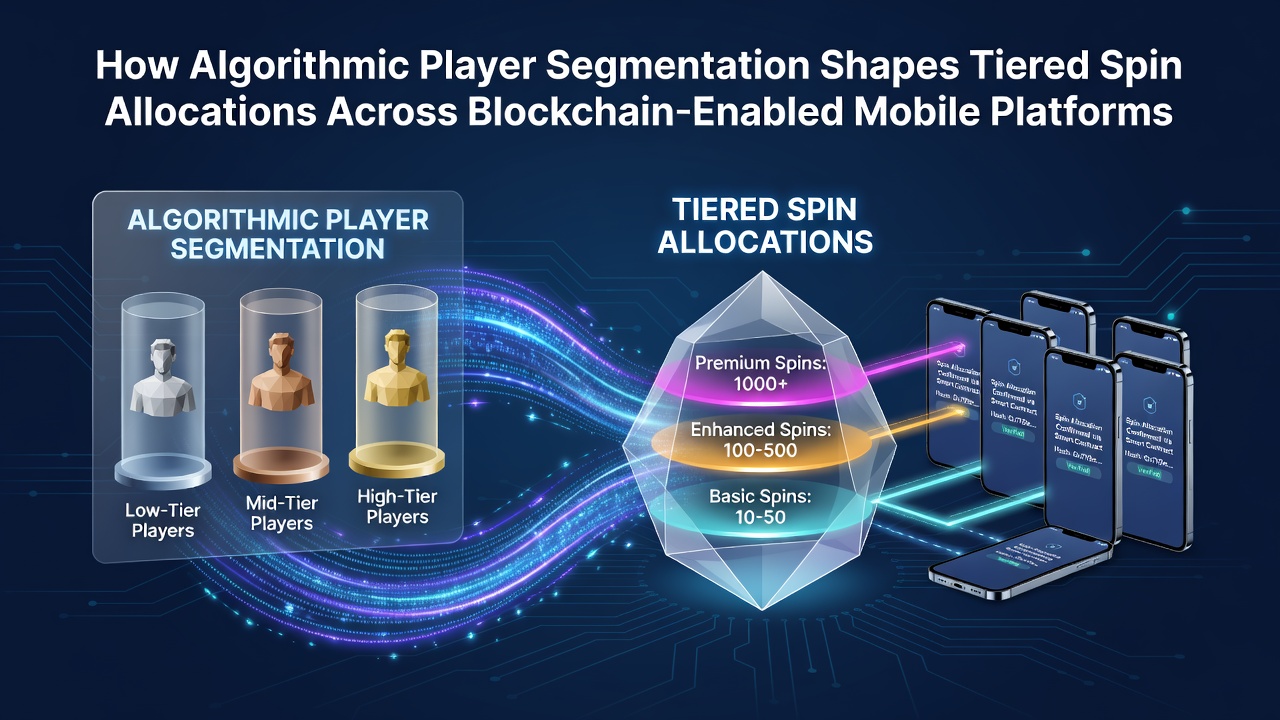
Blockchain-enabled mobile platforms rely on algorithmic player segmentation to divide users into distinct groups based on behavioral metrics such as session frequency, average wager size, and retention history, and these groups then receive tailored spin allocations that scale across multiple reward tiers. Developers integrate smart contracts on distributed ledgers to record every allocation decision, which creates an immutable audit trail that regulators and operators can review without relying on centralized databases.
Core Mechanics of Segmentation Algorithms
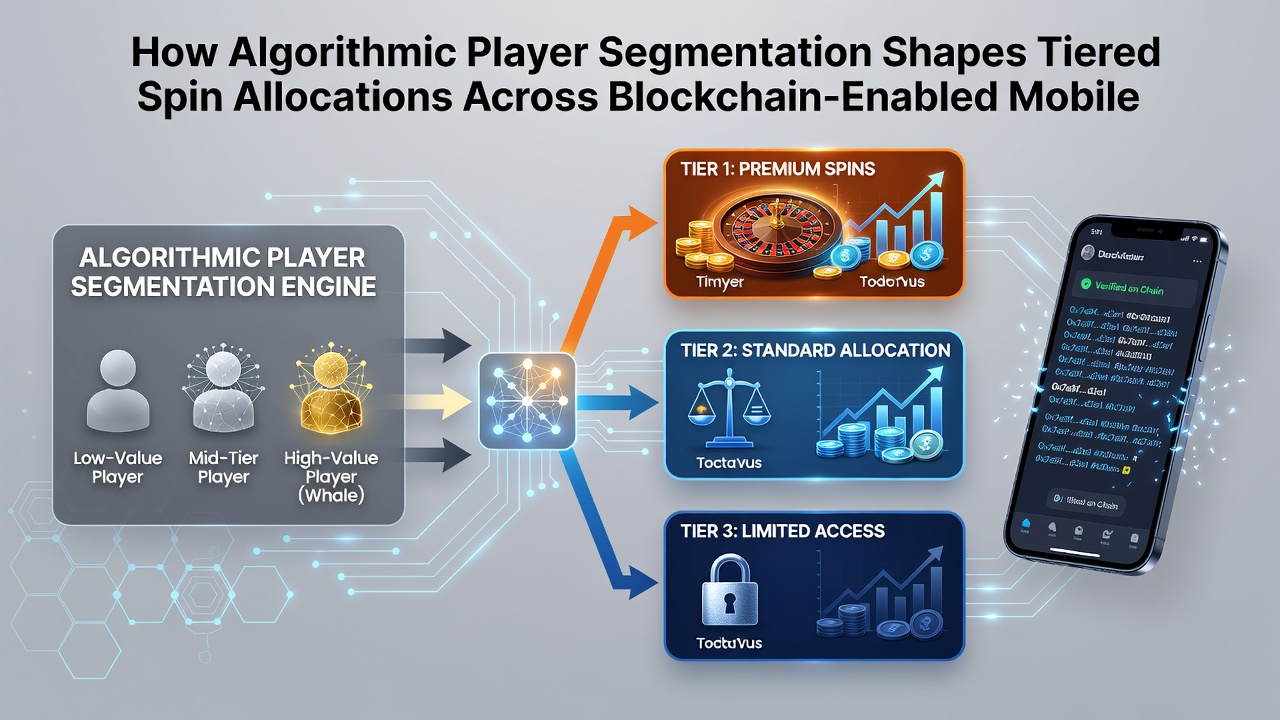
Segmentation models process real-time data streams from mobile applications, and they apply clustering techniques to assign players to categories that range from entry-level participants to high-frequency users. Each category maps to a specific spin allocation formula where lower tiers receive fixed daily spins while higher tiers unlock variable amounts tied to cumulative play volume and on-chain transaction history. Platforms update these models periodically, and in August 2026 several operators adjusted weighting factors to account for new blockchain scaling solutions that reduced latency in spin credit distribution.
Engineers train the underlying machine learning components on anonymized datasets drawn from millions of sessions, yet they embed constraints that prevent over-segmentation which could fragment smaller player pools. The resulting tiers feed directly into automated smart contracts that release spin credits only after predefined on-chain conditions are met, and this process eliminates manual intervention in most cases.
Integration with Blockchain Ledger Systems
Smart contracts on public or permissioned blockchains store tier definitions as immutable code, and any change to allocation rules requires a new transaction that all network participants can verify. Mobile applications query these contracts through lightweight nodes or oracle services, which return the exact number of spins a given player address qualifies for at any moment. Observers note that this architecture reduces disputes because every allocation carries a timestamp and cryptographic proof rather than depending on opaque server-side calculations.
Cross-platform compatibility improves when multiple operators adopt shared segmentation standards published by industry consortia, and players can carry their tier status across applications that support the same ledger protocols. Data from the Nevada Gaming Control Board indicates that blockchain-integrated systems processed over 12 million spin allocations in the first half of 2026, with segmentation accuracy rates exceeding 94 percent according to internal audits released by participating operators.
Tier Structures and Allocation Formulas
Most platforms define four to six primary tiers, each governed by thresholds for total wagered value and account age on the blockchain. Entry tiers grant a baseline of three to five spins per day, while mid-level tiers scale allocations linearly with verified play volume recorded in smart contract logs. Top tiers incorporate dynamic multipliers that adjust weekly based on network-wide activity metrics, and these multipliers execute automatically once the contract detects sufficient on-chain deposits or withdrawal patterns.
Research from the University of Nevada, Las Vegas gaming analytics program shows that players who move between tiers within a 30-day window exhibit a 28 percent higher average session length compared with static-tier users. Operators publish tier progression charts on-chain so participants can track their status without contacting support teams, and this transparency aligns with requirements from multiple gaming authorities including those in New Jersey and Singapore.
Regulatory and Technical Considerations
Regulators require that segmentation criteria remain publicly auditable, and blockchain records satisfy this demand by allowing third-party verification of every allocation event. Technical teams must balance algorithmic complexity with mobile device constraints, which leads them to offload heavy computation to edge servers that sync results back to the ledger. In August 2026 updates to certain layer-two scaling solutions enabled faster confirmation times, and several platforms reported reduced average spin credit delivery latency from 14 seconds to under three seconds.
Security audits focus on preventing manipulation of input data streams that feed the segmentation models, and smart contract developers implement multi-signature requirements for any parameter changes that affect tier boundaries. Industry reports from the Canadian Gaming Association highlight that platforms using these combined systems experienced a 19 percent drop in manual support tickets related to reward disputes during the second quarter of 2026.
Conclusion
Algorithmic player segmentation continues to define how blockchain-enabled mobile platforms distribute tiered spin allocations, and the combination of on-chain verification with data-driven clustering produces allocation systems that scale across user bases while maintaining verifiable fairness. As ledger technologies mature and regulatory frameworks adapt, these mechanisms are expected to expand into additional regions where mobile gaming operates under licensed conditions.