Progressive Reward Pathways: How Sequential Play Milestones Trigger Customized Incentive Layers in App-Driven Gaming Ecosystems
Amir Koch · Jun 22, 2026
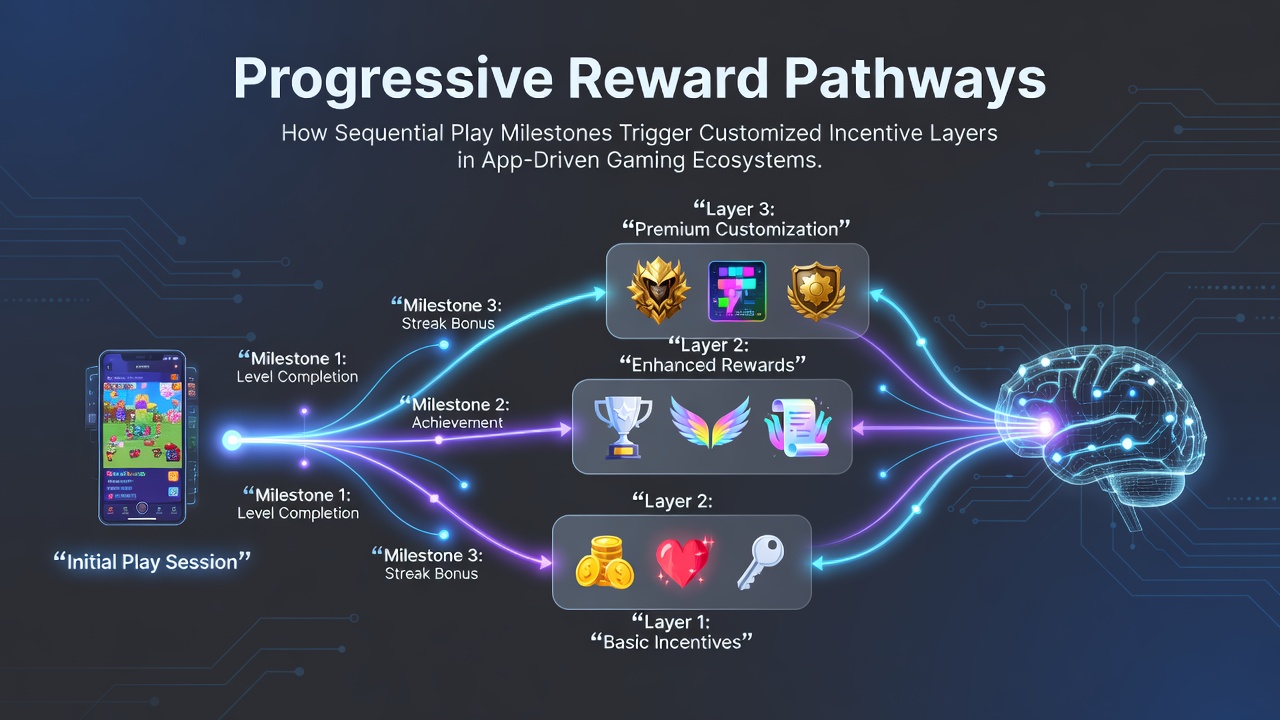
Progressive Reward Pathways: How Sequential Play Milestones Trigger Customized Incentive Layers in App-Driven Gaming Ecosystems
App-driven gaming ecosystems have developed intricate systems where sequential play milestones activate customized incentive layers that adapt to individual user patterns over time. These pathways rely on tracked progression through levels or stages, each one prompting specific rewards that build upon prior achievements rather than resetting with every session. Data from mobile gaming platforms indicates that such structures maintain engagement by aligning incentives with cumulative activity, and operators adjust parameters based on aggregated user metrics collected through application interfaces.
Mechanics of Sequential Milestones in Gaming Applications
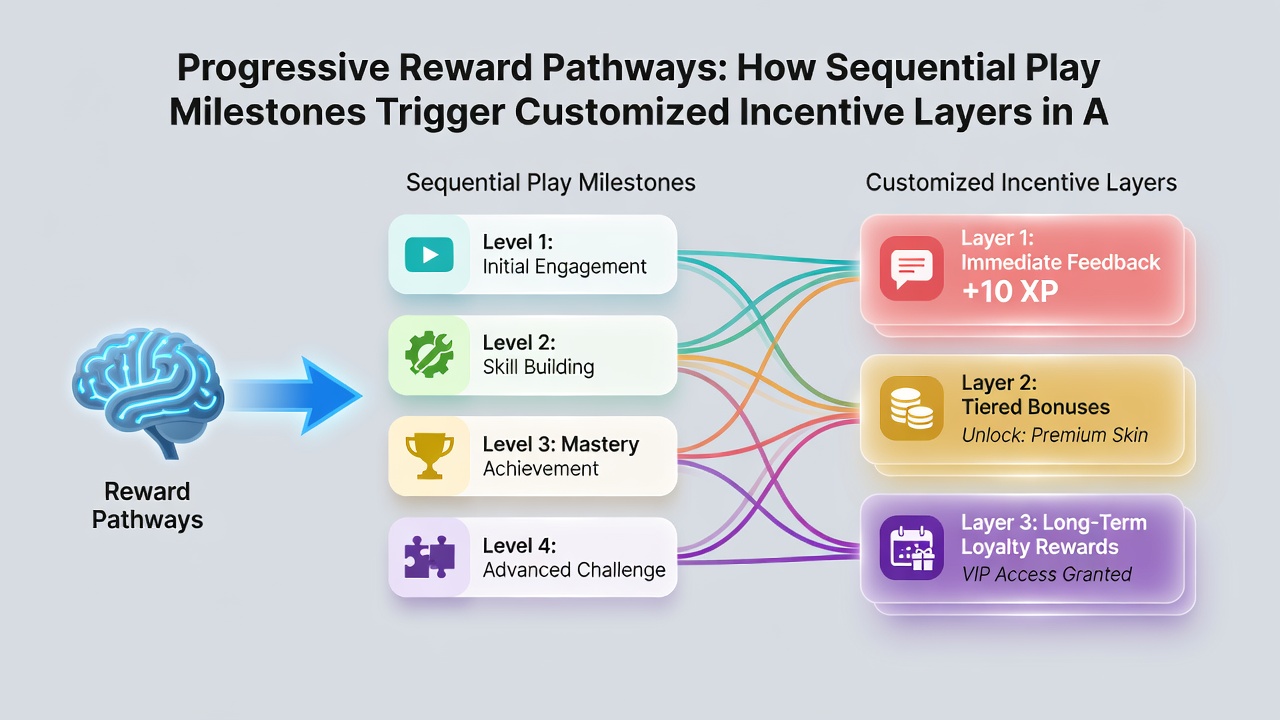
Sequential milestones function as checkpoints within app frameworks, where completion of defined play volumes or achievement sets unlocks the next tier of incentives. Researchers have observed that these checkpoints often incorporate variables such as session duration, game variety, and frequency of returns, allowing systems to calibrate rewards dynamically. In practice, a user advancing through initial stages might receive base-level credits or access privileges, while later milestones introduce multipliers or exclusive features tied directly to the preceding sequence. Industry reports show that this layering occurs through backend algorithms that process real-time data streams from user devices, ensuring continuity across multiple logins.
According to analyses from the American Gaming Association, mobile platforms in regulated markets have expanded these milestone systems to cover both free-to-play and real-money environments, with updates rolled out in phases throughout 2025 and into mid-2026. The process avoids static rewards by referencing historical play data to determine incentive scale, which means two users reaching the same milestone can receive differentiated layers based on their individual trajectories.
Customization Through Incentive Layers
Customized incentive layers emerge when milestone completion triggers conditional adjustments that reflect user-specific profiles. These layers might include time-limited boosts, resource allocations, or feature unlocks scaled to match engagement depth. Observers note that app ecosystems integrate machine learning elements to refine these customizations, drawing from patterns observed across large user bases rather than isolated sessions. Figures from platform analytics reveal that such personalization correlates with extended retention periods, as the system recalibrates offerings at each sequential point to maintain relevance.
What's notable is how these layers stack without overlapping redundantly, since each milestone references the prior sequence to determine eligibility. For instance, reaching a mid-tier checkpoint after consistent weekly activity could activate a customized bonus pool that differs from one granted after sporadic high-volume bursts. Regulatory filings in jurisdictions like New Jersey have documented similar implementations in licensed apps, where compliance protocols require transparent tracking of these adaptive mechanisms.
Integration Across Broader Gaming Ecosystems
Ecosystem integration extends these pathways beyond single applications into interconnected networks of games and services. Users progressing through milestones in one title often carry forward eligibility into linked environments, creating cross-platform continuity. Studies conducted by academic groups affiliated with institutions in Australia have examined how such linkages affect overall participation rates, finding that sequential triggers encourage exploration of additional titles within the same ecosystem. As of June 2026, several major operators have reported expanded adoption of these integrated models, citing backend efficiencies that allow real-time synchronization of milestone data across devices.
Yet the systems also account for external factors, such as regional regulatory variations, which influence how layers are deployed. In Canadian markets, for example, provincial oversight bodies have required explicit disclosure of milestone criteria to ensure fairness in reward distribution. This approach contrasts with earlier uniform bonus models by emphasizing progression-based customization that evolves with sustained use.
Observational Patterns in User Progression
Those monitoring app analytics describe clear patterns where early milestones serve as entry points that establish baseline incentives, while advanced stages introduce complexity through conditional multipliers or tiered access. Evidence from aggregated platform data suggests that users who navigate multiple sequential layers demonstrate higher lifetime activity metrics compared to those engaging with isolated rewards. The pathways incorporate feedback loops that adjust future milestones based on completion rates, allowing ecosystems to refine incentive structures without manual intervention.
One documented case involved a European operator that mapped referral chains onto milestone sequences, resulting in layered incentives that scaled with both personal progression and network effects. Such configurations rely on encrypted data exchanges between app components to maintain accuracy across sessions, and updates in 2026 have focused on enhancing these exchanges for greater precision.
Conclusion
Progressive reward pathways in app-driven gaming ecosystems operate through structured sequences of milestones that systematically activate customized incentive layers. These mechanisms draw on user data to deliver adaptive rewards, with integration across platforms supporting continuity and personalization. Reports from various regulatory and industry sources confirm ongoing refinements in these systems as of June 2026, reflecting broader shifts toward data-informed engagement models in mobile gaming environments.