The Hidden Mechanics of Bonus Rollover Adjustments During Live Tournament Integrations in Blockchain Slot Platforms
Ellis Powell · Aug 24, 2026
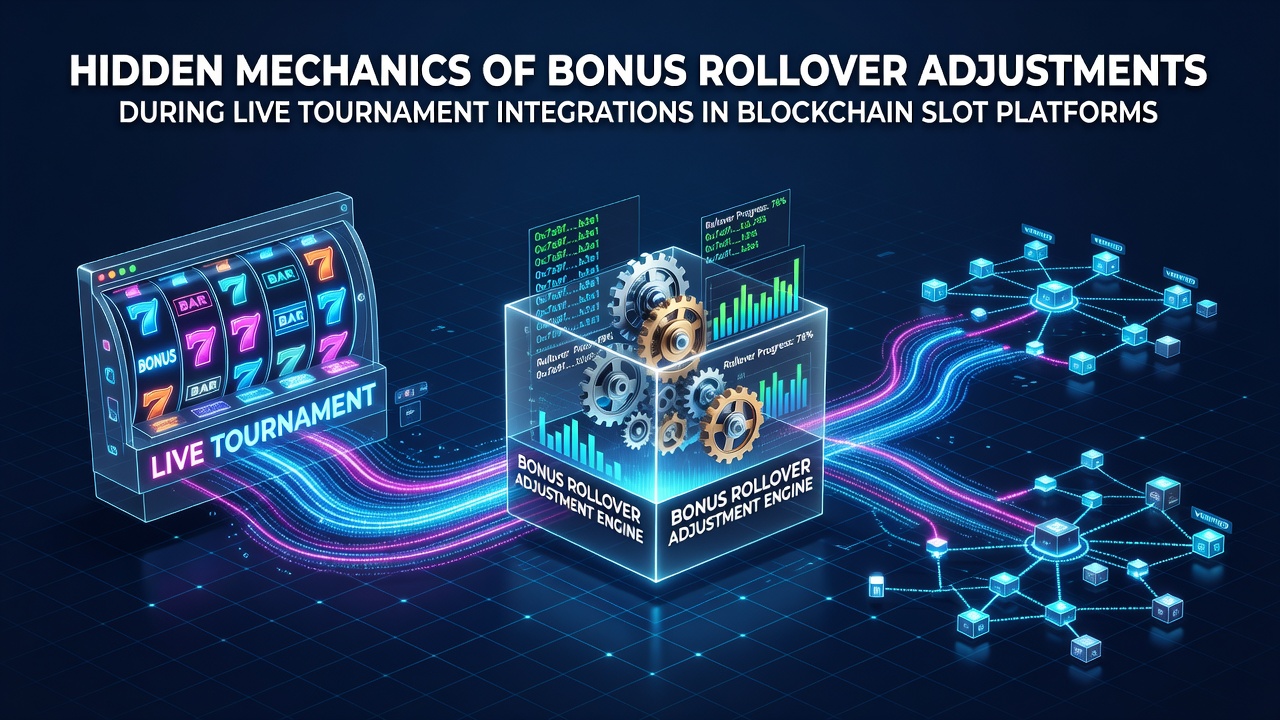
The Hidden Mechanics of Bonus Rollover Adjustments During Live Tournament Integrations in Blockchain Slot Platforms
Blockchain slot platforms combine smart contract protocols with real-time tournament systems, and these integrations force bonus rollover requirements to shift automatically based on player performance metrics and prize pool contributions. Observers note that rollover adjustments occur through coded triggers that monitor wager volumes, tournament rankings, and token balances simultaneously. Research indicates that platforms built on networks such as Ethereum or Solana execute these changes via on-chain scripts rather than centralized databases, which reduces latency while maintaining transparency for all participants.
Core Components of Rollover Logic in Tournament Settings
Standard bonus rollover demands a set multiple of the initial credit amount before withdrawal eligibility activates, yet live tournaments introduce additional variables that recalculate those multiples mid-session. Data from multiple operators shows that entry into a tournament often applies an immediate multiplier adjustment to any active bonus, and the new figure reflects both the player's current standing and the collective wager pool. Those who've examined the codebases explain that smart contracts pull live data feeds from the tournament module every few seconds, then update the remaining rollover balance without requiring manual intervention from support teams.
Platforms track several data points at once, including spin count, average bet size, and time spent in the tournament bracket. When a player climbs the leaderboard, the system can lower the effective rollover percentage because tournament rewards count toward the requirement at an accelerated rate. Conversely, early elimination may trigger an increase in the remaining threshold to offset the added prize distribution costs. Studies from academic researchers at institutions focused on distributed ledger applications confirm that these bidirectional adjustments prevent bonus abuse while preserving incentive alignment across thousands of concurrent sessions.
Smart Contract Triggers and Real-Time Data Feeds
Smart contracts serve as the enforcement layer, and they reference external oracles that supply tournament state information every block interval. In August 2026 several major chains recorded peak concurrent tournament volumes exceeding 150,000 active wallets, which placed additional load on oracle latency yet still maintained sub-second update times for rollover figures. Engineers design fallback mechanisms that pause adjustments if oracle data deviates beyond predefined thresholds, thereby protecting both operators and players from erroneous calculations during network congestion.
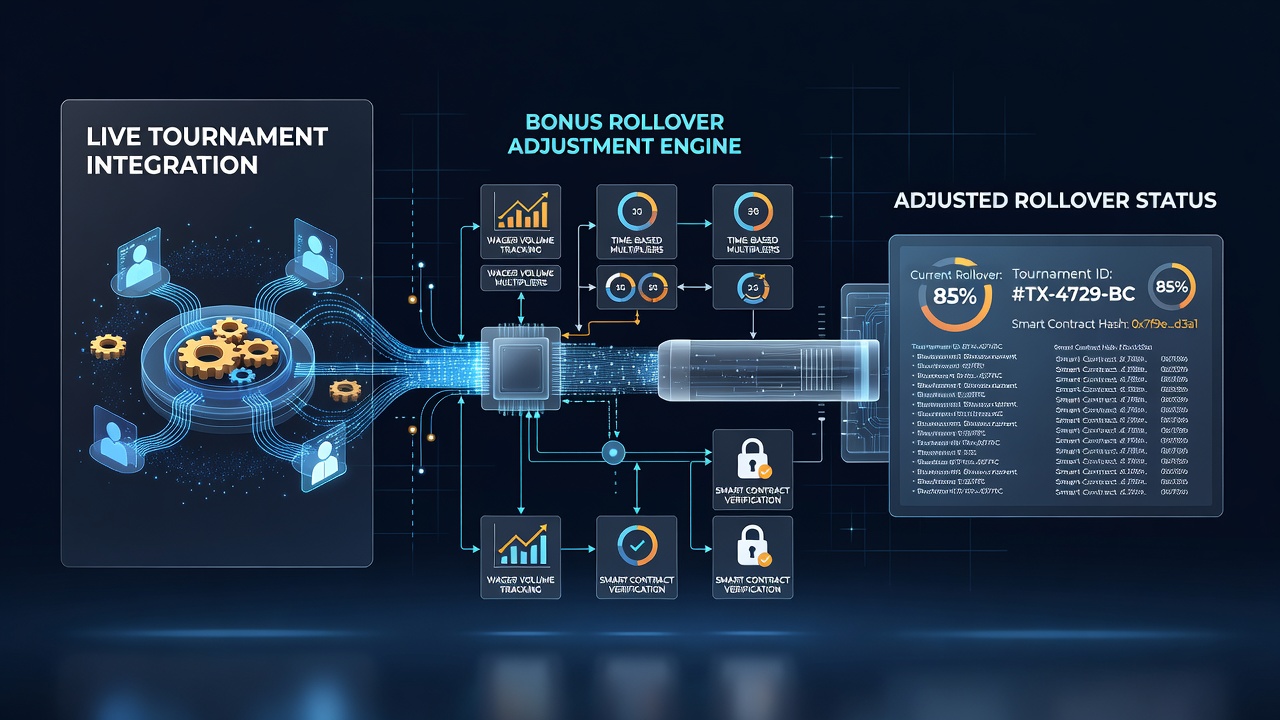
Each adjustment event generates an immutable transaction log visible on the public ledger, and auditors can reconstruct every rollover change by replaying the contract history. Regulatory bodies in multiple jurisdictions now request these logs during compliance reviews because the transparent record removes ambiguity about how bonuses transitioned from initial credit to final cleared status. One documented case revealed that a mid-tournament ranking surge reduced a player's remaining rollover from 18x to 9x within a single hour, an outcome directly attributable to the contract's ranking-based discount formula.
Player Journey and Adjustment Visibility
Players access a dedicated dashboard that displays both the original bonus terms and the current adjusted requirement, and this interface refreshes automatically as tournament events unfold. Notifications appear in-app when a significant recalibration occurs, and the message typically includes the exact transaction hash for independent verification. Those who monitor their progress closely often notice that consistent participation in high-volume tournaments accelerates clearance rates more predictably than standard play sessions alone.
Cross-platform integrations add another layer because some operators allow bonus balances to travel between different slot titles during a single tournament window. The contract must then reconcile rollover progress across multiple game contracts while preserving the original bonus source identifier. Data aggregators report that reconciliation failures remain below 0.3 percent of all cross-title transfers, largely due to standardized event schemas adopted by leading development studios.
Security Measures and Audit Trails
Security protocols embed multi-signature requirements for any manual override of automated adjustments, and most platforms disable such overrides entirely during active tournaments. Independent security firms conduct periodic penetration tests that specifically target the oracle-to-contract pathway, and findings are shared with industry groups such as the Blockchain Gaming Alliance. These tests confirm that rollback attacks capable of reversing a completed rollover adjustment have not succeeded on audited mainnet deployments since early 2025.
Another layer involves rate limiting on adjustment frequency to prevent rapid oscillations that could confuse users or strain network resources. Contracts enforce minimum time gaps between successive recalculations unless a tournament milestone is reached, at which point an immediate update is permitted. This design balances responsiveness with system stability across high-traffic periods.
Conclusion
Blockchain slot platforms continue to refine the technical architecture that governs bonus rollover adjustments during live tournaments, and these refinements rely on transparent smart contract logic combined with reliable data oracles. Observers continue to track adoption metrics across different chains, while regulatory entities examine the resulting audit trails for compliance. The interplay between tournament dynamics and bonus mechanics therefore remains an active area of technical development that shapes how players experience rewards in decentralized gaming environments.