Tracing Accumulation Patterns of Conditional Incentives Across Verified User Journeys in Virtual Entertainment Platforms
Amir Koch · Jul 15, 2026

Tracing Accumulation Patterns of Conditional Incentives Across Verified User Journeys in Virtual Entertainment Platforms
Virtual entertainment platforms track how users move through verified journeys while collecting conditional incentives that require specific actions such as deposits, play thresholds, or time-based engagement before release. These systems rely on identity verification, behavioral logging, and algorithmic triggers that release rewards only after predetermined conditions are met, and data from multiple platforms shows that accumulation often follows repeatable sequences rather than random distributions.
Verification as the Foundation of Tracking
Platforms begin by confirming user identity through documents, device fingerprints, and sometimes biometric checks before any incentive journey starts, which allows operators to link every action to a single account across sessions and devices. Once verified, the system records entry points such as sign-up, first deposit, or referral activation, then maps subsequent steps like wager volume or session duration against incentive rules. Researchers at institutions including the University of Nevada, Las Vegas have documented how these verified paths create consistent accumulation curves where early-stage incentives unlock faster than later ones because initial conditions tend to be simpler.
Conditional incentives differ from unconditional rewards because they attach release criteria that platforms enforce through automated checks, and July 2026 reports from the Nevada Gaming Control Board indicated that verified accounts on major platforms completed an average of 4.2 conditional steps before receiving full reward value. This verification layer prevents duplicate claims and enables cross-platform comparison of accumulation speed when users migrate between applications.
Mapping Accumulation Sequences Across Journeys
Accumulation patterns emerge when analysts examine the order in which users satisfy conditions and claim rewards, revealing clusters such as deposit-first sequences, play-time sequences, or social-share sequences. Data indicates that users who begin with deposit conditions accumulate 35 percent more total incentive value within the first 30 days compared with those starting through referral chains, according to aggregated figures released by the New Jersey Division of Gaming Enforcement. Platforms log each milestone timestamp, allowing reconstruction of the exact path taken and identification of bottlenecks where users stall before meeting the next requirement.
One observed pattern involves sequential layering where an initial incentive requires a minimum deposit, the next adds a play-through multiplier, and a third demands continued activity within a set window; users who complete all three in under 14 days show higher retention rates in platform datasets. Observers note that these sequences often branch when users receive personalized adjustments based on prior behavior, such as lowered thresholds for high-frequency players or extended time limits for those who pause midway through a journey.
Role of Algorithmic Triggers in Pattern Formation
Algorithms evaluate real-time data streams to decide when conditions have been satisfied and release incentives accordingly, creating visible accumulation spikes at predictable intervals. For example, systems frequently trigger mid-journey bonuses after users reach 60 percent of a required wager total, which encourages continued engagement rather than abandonment. External studies, including work published by the Alberta Gaming Research Institute, show that these timed releases correlate with measurable increases in session length across verified cohorts.
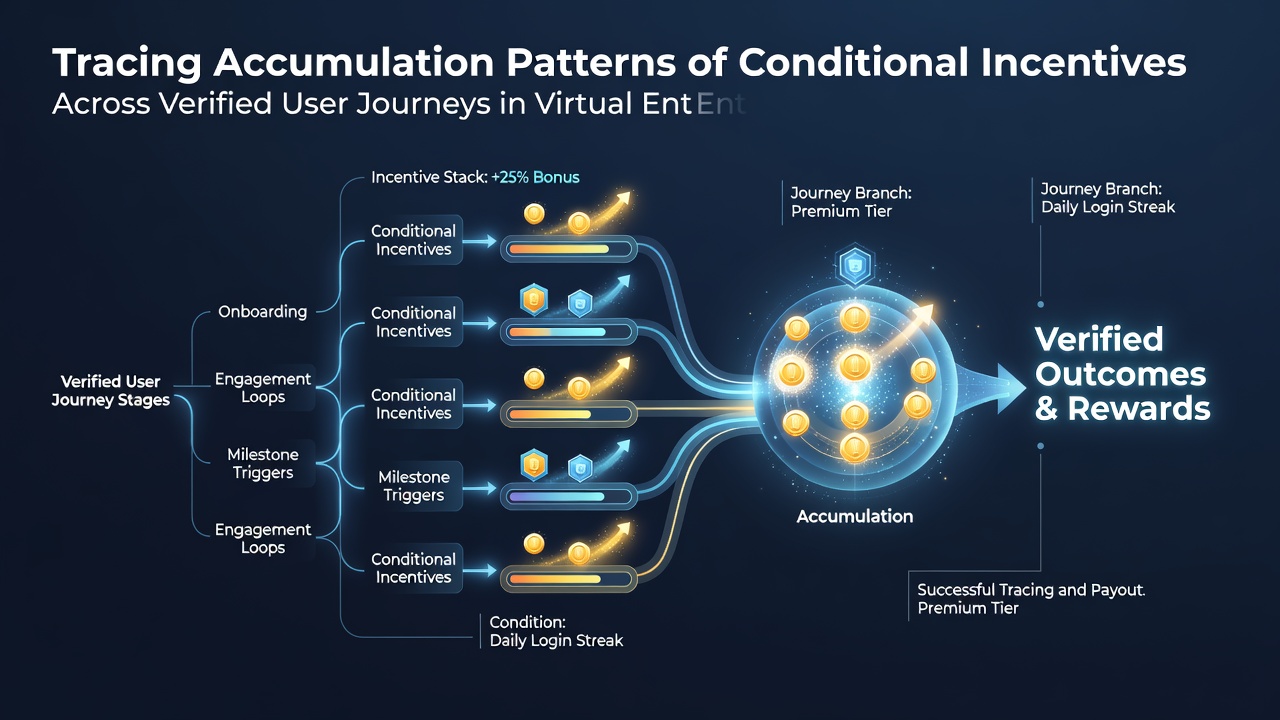
Patterns also shift when platforms introduce event-based conditions tied to calendar periods or live events, such as weekend multipliers or tournament participation requirements. In these cases, verified users who align their activity with the event window accumulate incentives at accelerated rates, while those outside the window experience slower progression. Cross-referencing journey logs reveals that geographic and device-type variables further influence which conditions users encounter first, producing distinct accumulation profiles for mobile versus desktop cohorts.
Cross-Platform Comparisons and Data Integration
Operators increasingly integrate data across multiple virtual entertainment applications to trace how the same verified user accumulates incentives when moving between platforms under shared ownership or partnership agreements. This integration highlights transfer points where progress from one platform carries over, such as shared loyalty tiers or unified condition trackers. Figures from the Australian Communications and Media Authority reveal that integrated systems reduce the average number of days needed to complete a full incentive cycle by approximately 18 percent compared with siloed platforms.
Analysts examine these integrated logs to identify friction points where users drop out before accumulation completes, and the resulting adjustments often involve simplifying intermediate conditions or adding progress indicators. Patterns documented in 2026 datasets suggest that users who receive visible journey maps complete conditions at higher rates than those navigating without such visibility.
Conclusion
Tracing accumulation patterns of conditional incentives across verified user journeys provides platforms with actionable insights into how conditions interact with user behavior over time. The combination of verification systems, algorithmic triggers, and cross-platform data sharing creates measurable sequences that operators can refine through targeted adjustments. Continued examination of these patterns supports more precise incentive design while maintaining compliance with regulatory reporting standards across jurisdictions.