Tracing Loyalty Milestone Triggers that Reshape Free Spin Allocations in Crypto-Enabled Mobile Gaming Platforms
Amir Koch · Aug 27, 2026
Tracing Loyalty Milestone Triggers that Reshape Free Spin Allocations in Crypto-Enabled Mobile Gaming Platforms
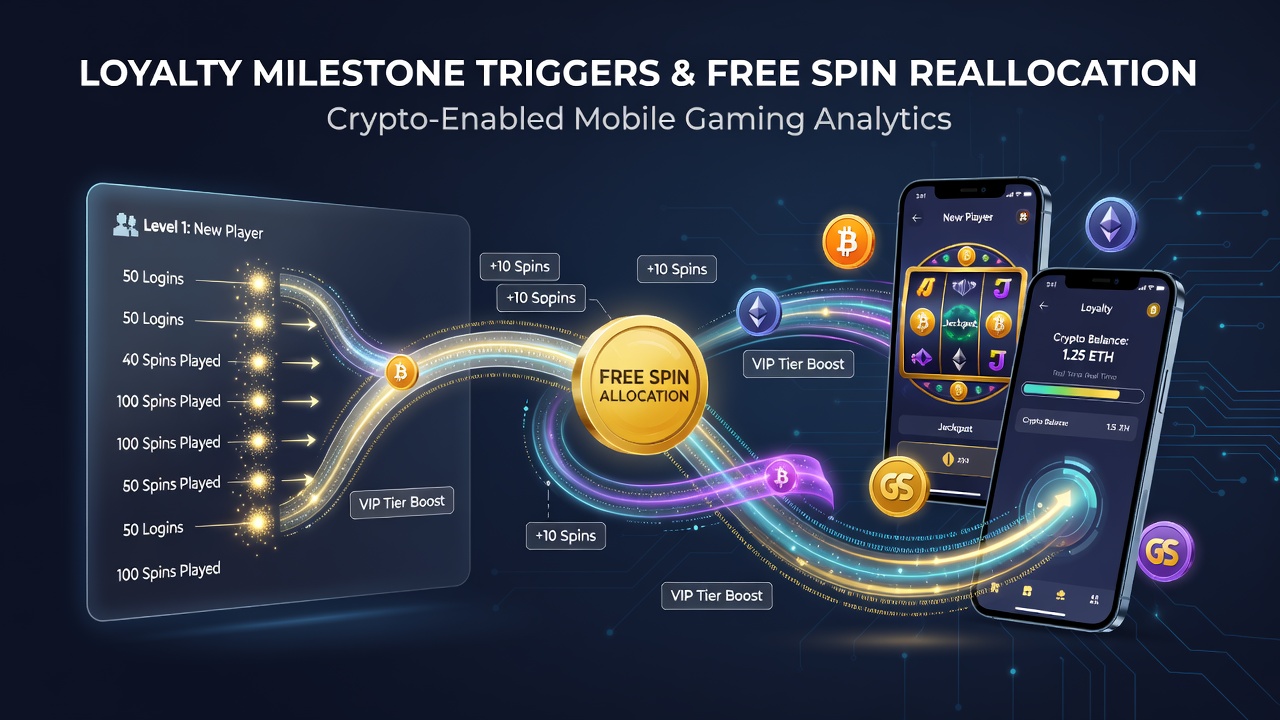
Platforms that integrate cryptocurrency payments with mobile gaming have introduced loyalty systems where milestone achievements directly influence free spin distributions, and these triggers often activate at predetermined play volumes or deposit thresholds tracked through blockchain ledgers. Observers note that such mechanisms replace traditional point accumulations with automated smart contract executions that release spins upon reaching specific activity markers.
Core Mechanics of Milestone Detection
Developers embed detection algorithms that monitor session lengths, wager sizes, and transaction frequencies in real time, while the system cross-references these metrics against user wallet histories to confirm milestone completion. Data shows that once a trigger fires the allocation engine recalculates available spins based on the player's current tier and recent crypto deposit patterns, and this process typically completes within seconds because the underlying code pulls live blockchain confirmations rather than relying on centralized databases.
Platforms record each milestone event as an immutable entry, which allows operators to audit spin releases without manual intervention, and analysts have documented cases where a single large crypto transfer combined with sustained playtime unlocked additional spin batches that standard loyalty tables would have withheld.
Cryptocurrency Influence on Allocation Formulas
Because crypto transactions settle faster than traditional payment rails, platforms adjust free spin formulas to reward rapid deposit cycles, and research from the Nevada Gaming Control Board indicates that mobile titles accepting stablecoins and major tokens saw a measurable uptick in milestone-triggered spin grants during periods of high network activity. The formulas incorporate volatility buffers so that sudden price swings in the underlying currency do not inflate or deflate the number of spins awarded, which keeps the economic value consistent across different market conditions.
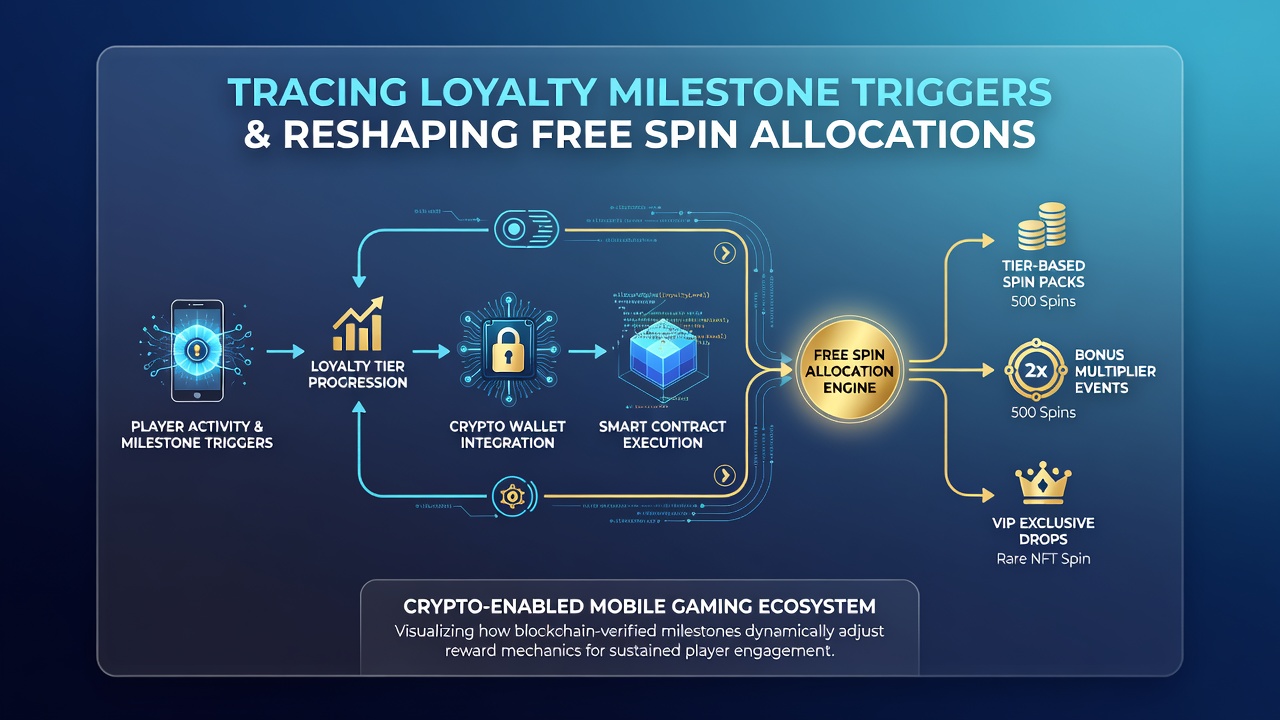
Those who have examined transaction logs across multiple apps report that milestone triggers tied to crypto deposits often grant spins at higher multipliers when the deposit originates from a verified cold wallet, whereas hot wallet activity sometimes receives standard rates until additional verification steps complete. This differentiation stems from risk-scoring models that platforms update periodically to reflect evolving security patterns in cryptocurrency usage.
Recent Patterns Observed Through August 2026
Figures compiled through August 2026 reveal that several platforms refined their milestone definitions to include cross-game progression, meaning spins earned in one title could contribute toward unlocks in another title within the same ecosystem. Such changes emerged after operators noticed that siloed tracking reduced overall engagement duration, and the revised systems now aggregate activity across titles before releasing the corresponding spin packages.
Industry reports from the Canadian Gaming Association highlight that crypto-enabled mobile environments recorded higher average spin allocations per milestone compared with fiat-only counterparts, yet the total value distributed remained proportional to verified play volume because smart contracts enforce caps based on deposit amounts and historical loss ratios.
Examples of Trigger Implementation
One documented implementation requires a player to complete a set number of high-value spins within a 24-hour window while maintaining a minimum crypto balance, after which the system automatically credits additional free spins scaled to the net wager total. Another approach tracks consecutive login streaks funded exclusively through cryptocurrency deposits, and upon hitting the streak target the allocation engine issues spins whose quantity depends on the cumulative deposit size recorded on the blockchain.
Take the case where experts examined a Southeast Asian platform that adjusted its triggers in response to seasonal network congestion, and the adjustments prevented spin releases from stalling when transaction confirmations slowed, thereby maintaining consistent user experience even during peak volatility periods.
Technical Integration Challenges
Engineers must synchronize mobile app frontends with multiple blockchain nodes to avoid discrepancies in milestone verification, and any lag in node response can delay spin allocation until consensus is reached across the network. Platforms therefore maintain redundant verification paths that switch automatically when primary nodes experience delays, which ensures that free spin releases remain uninterrupted for the end user.
Those who have studied these systems note that the combination of loyalty milestones with crypto rails creates audit trails that regulatory bodies can review more efficiently than traditional bonus systems, because every allocation event carries a timestamped transaction hash that links back to the originating deposit and play activity.
Conclusion
The evolution of loyalty milestone triggers continues to reshape how free spins are allocated within crypto-enabled mobile gaming environments, and the integration of blockchain verification has introduced both precision and transparency into the process. As platforms refine detection algorithms and allocation formulas, the relationship between player activity, cryptocurrency movements, and spin releases becomes increasingly automated and traceable through immutable records.